vLLM Concurrency Lab
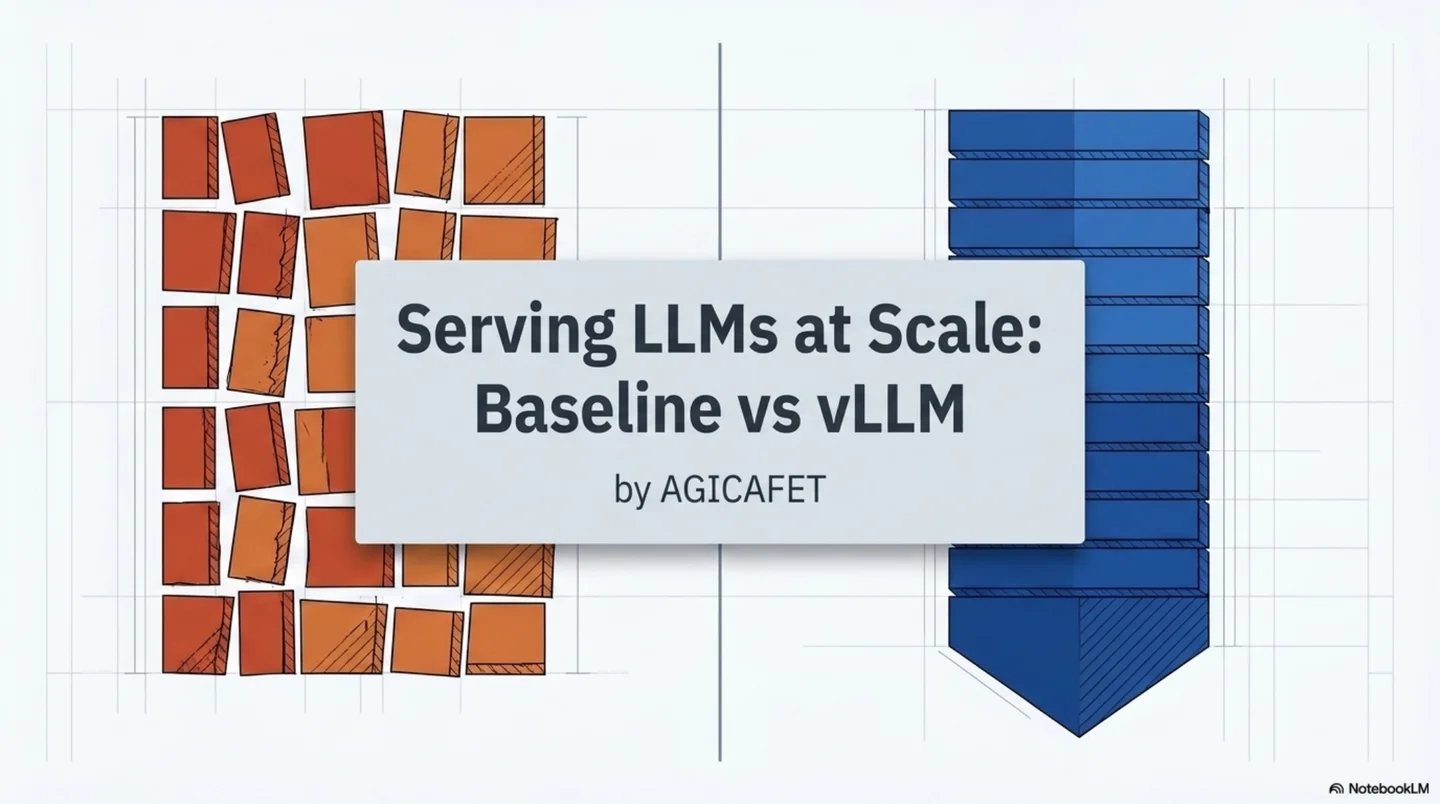
Hands-on lab for university students: why vLLM serves far more users at once than a plain Hugging Face setup, on the same model and the same GPU.
- Category
- TeachingWorkshopAILLMOpen source
- Developer
 Anupun Khumthong
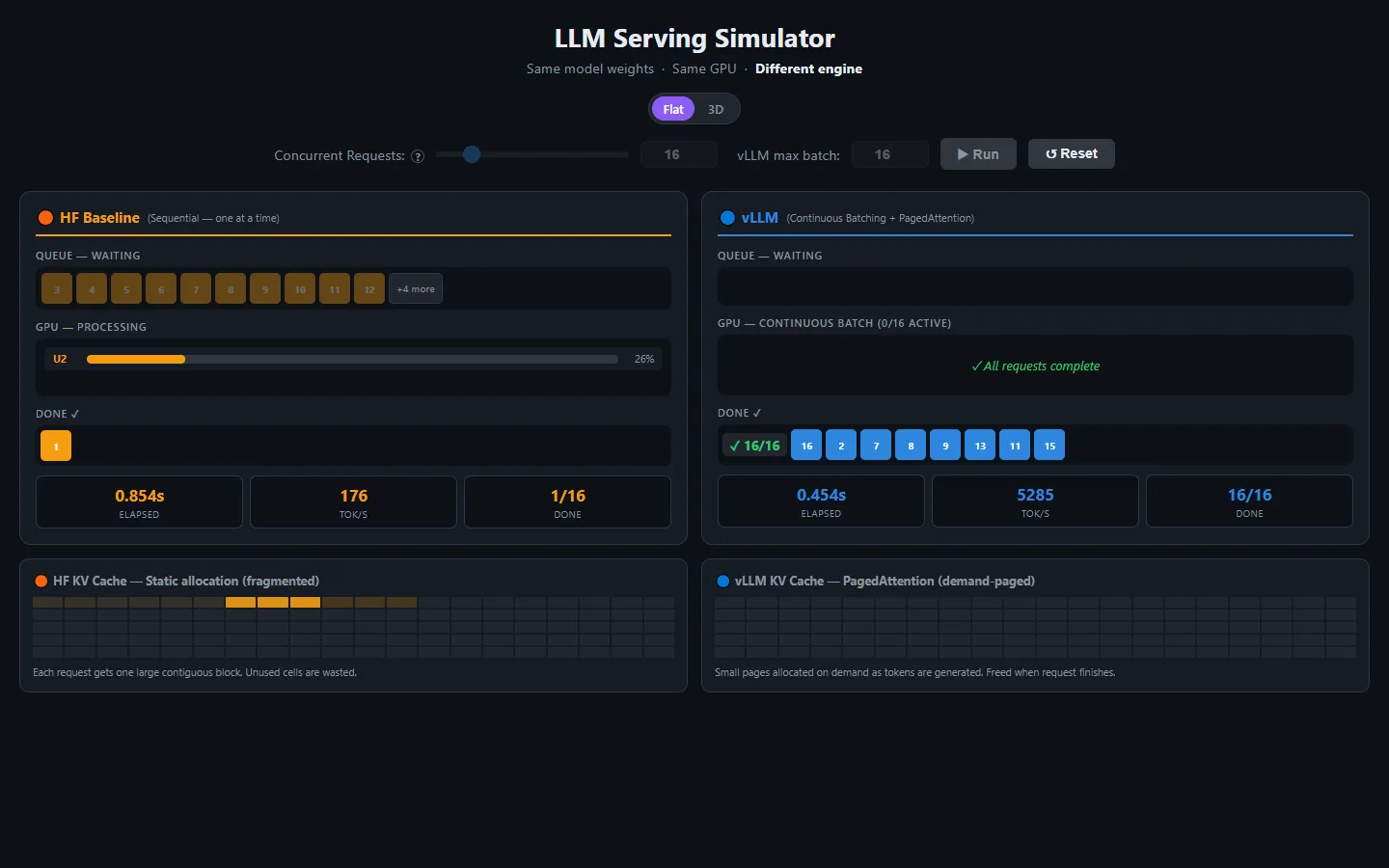
A 2-3 hour hands-on lab taught at CSTU Spark Camp in AI, a camp for university students run by AGICAFET on 8-10 June 2026. It answers one question: with the same model on the same machine, why does the choice of serving engine decide whether a system handles 10 users at once or 200?
The experiments
- A: single-request latency, Hugging Face Transformers against vLLM
- B: throughput with 1, 2, 4, 8 and 16 users at once, and where the baseline plateaus or runs out of memory
- C: output accuracy, to show the same weights give almost the same answers on both engines
The teaching tools
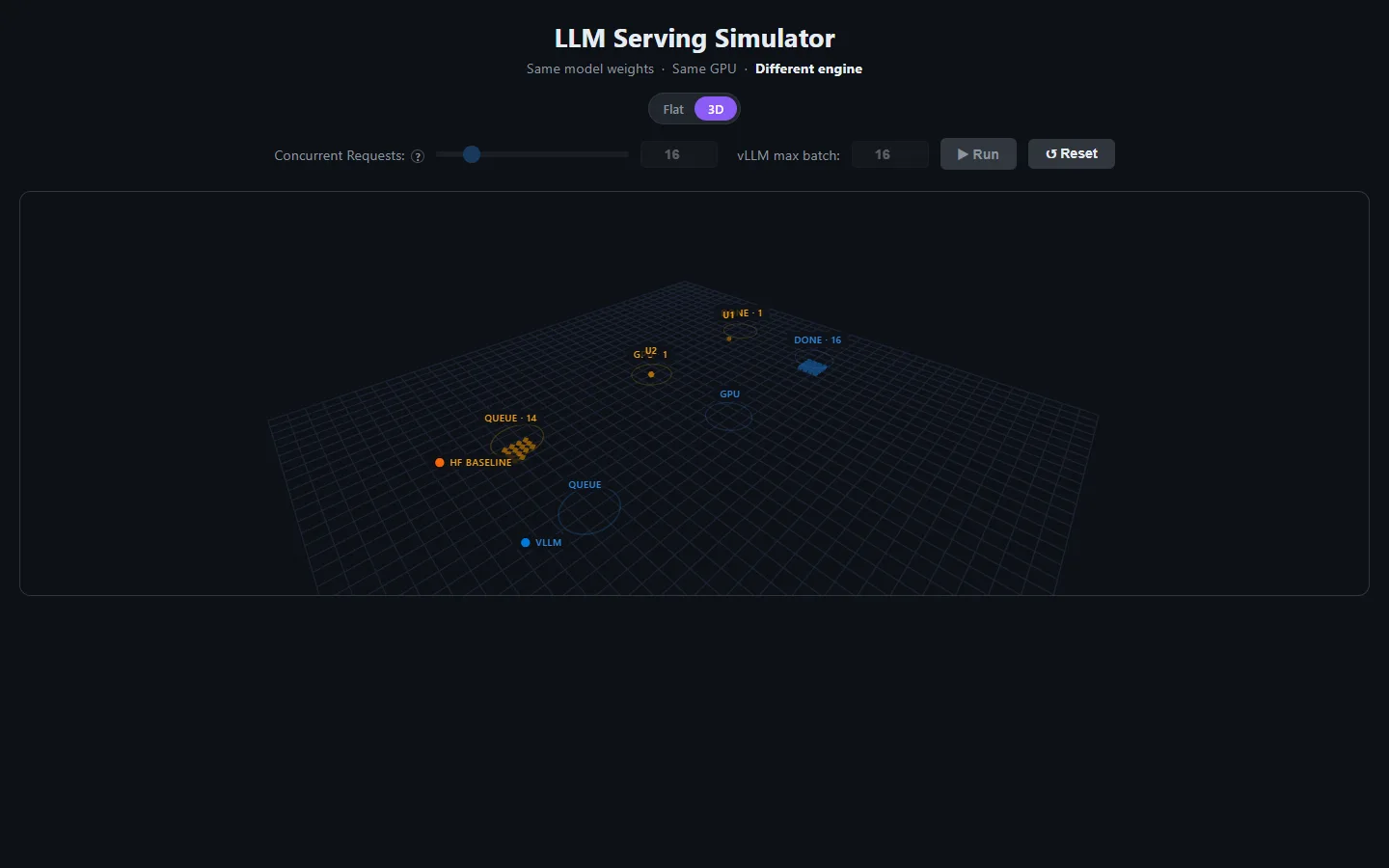
- An interactive serving simulator in the browser, flat or 3D, showing continuous batching and PagedAttention against a one-at-a-time baseline before anyone touches a GPU
- A Colab notebook that runs on the free T4 GPU, with an appendix for running it on your own NVIDIA GPU under WSL2
- Slides, plus a notes page on advanced techniques: speculative decoding, LoRA and quantization
Built with
- Qwen2.5-1.5B-Instruct on both engines
- vLLM behind an OpenAI-compatible API, load-tested with asyncio
- uv for installs and matplotlib for the charts
Screenshots
Teaching materials